


The Best Travel eSIM Plans for Easy International Connectivity
A travel eSIM is a digital SIM card you install on your phone before a trip, replacing the need for a physical plastic card. Once activated, it connects you to local networks abroad with a few taps, letting you skip expensive roaming fees and the hunt for Wi-Fi passwords. This means you can navigate, post, and message instantly upon arrival, with seamless connectivity from the moment you land.
Beyond Roaming Fees: The Modern Way to Stay Connected Abroad
The modern way to stay connected abroad has decisively moved beyond roaming fees with the travel eSIM. Instead of swapping physical cards or arriving to shockingly high bills, you simply scan a QR code to install a data plan before you even leave home. This gives you immediate, reliable internet upon landing in a new country—no registration, no searching for a local SIM vendor.
The key insight is that you maintain full access to apps, maps, and messaging without ever touching your primary number.
You handle connectivity like any other digital service: buy a small data package, activate it when you arrive, and ignore the traditional carriers’ overpriced daily passes. For anyone who travels, this shifts the entire experience from worrying about costs to simply staying online as if you never left.
What Digital Roaming Actually Means for International Trips
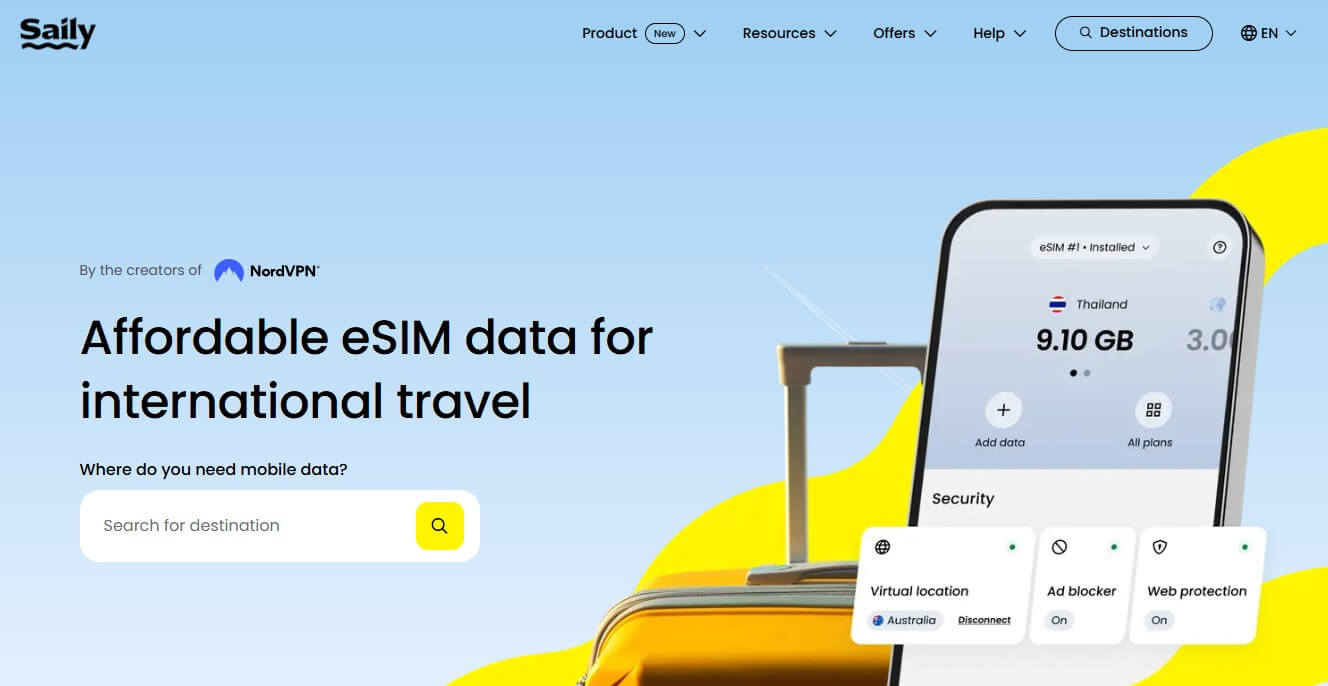
Digital roaming, when using a travel eSIM, means your phone connects to local networks abroad through a virtual profile rather than a physical SIM swap. You retain your primary number while using a prepaid data plan from a digital provider. This eliminates physical card handling and allows instant activation before departure. Your international data connection becomes seamless because the eSIM automatically authenticates with partner networks. Unlike traditional roaming, pricing is fixed upfront with no surprise bills for data overuse. Coverage depends on your eSIM’s network agreements, not your home carrier’s partnerships. You manage everything through an app or QR code, keeping your primary SIM active for calls or SMS if desired.
Why Physical SIM Cards Are Becoming Obsolete for Travelers
For the modern traveler, fumbling with a tiny physical SIM card feels archaic. Switching out your primary chip risks losing it or damaging the delicate slot, especially abroad. A travel eSIM eliminates this hassle by letting you activate a local data plan digitally, often before you even leave home. You avoid the frantic search for a local store or airport kiosk, removing the need to carry a paperclip for tray ejection. Why fiddle with a fragile piece of plastic when you can instantly switch networks via a QR code? Physical SIM cards are becoming obsolete for travelers because they introduce unnecessary risk and complexity to a process that should be seamless.
Physical SIM cards are failing travelers because they require fragile hardware swaps, physical purchases abroad, and the constant fear of losing your primary connection.
How Embedded SIMs Eliminate Last-Minute Airport Kiosk Hassles
An embedded SIM (eSIM) directly eliminates the airport kiosk scramble by allowing travelers to activate a data plan before departure. Instead of queuing for a physical nano-SIM, you install a digital profile via QR code or app on your existing device. This pre-trip setup means you are connected the moment you land, bypassing kiosk fees, language barriers, and sold-out stock entirely. The process is controlled from your phone’s settings, removing reliance on airport vendor hours or availability. Eliminating last-minute airport kiosk hassles is achieved through this instantaneous, log-in-from-anywhere activation.
- Activate a travel eSIM from home, avoiding kiosk queues and delays.
- No physical swap needed, so you keep your home number active simultaneously.
- Immediate connectivity upon landing, with no dependency on airport vendor stock.
Choosing the Right Plan for Your Destination
When choosing the right plan for your destination, prioritize data volume and validity length over brand loyalty. A short city trip to Japan needs a smaller 1-3 GB regional plan, while a two-week European tour demands a larger 10-20 GB multi-country package. Check if your travel eSIM supports hotspot tethering for laptops, and confirm the network operator covers rural areas, not just capital cities. Overestimating your data usage is safer; you can always top up a regional plan, but a global plan for a single country wastes money. Always match the plan’s activation country list to your exact itinerary to avoid roaming surprises.
Regional vs. Global Data Packages: Which Fits Your Itinerary?
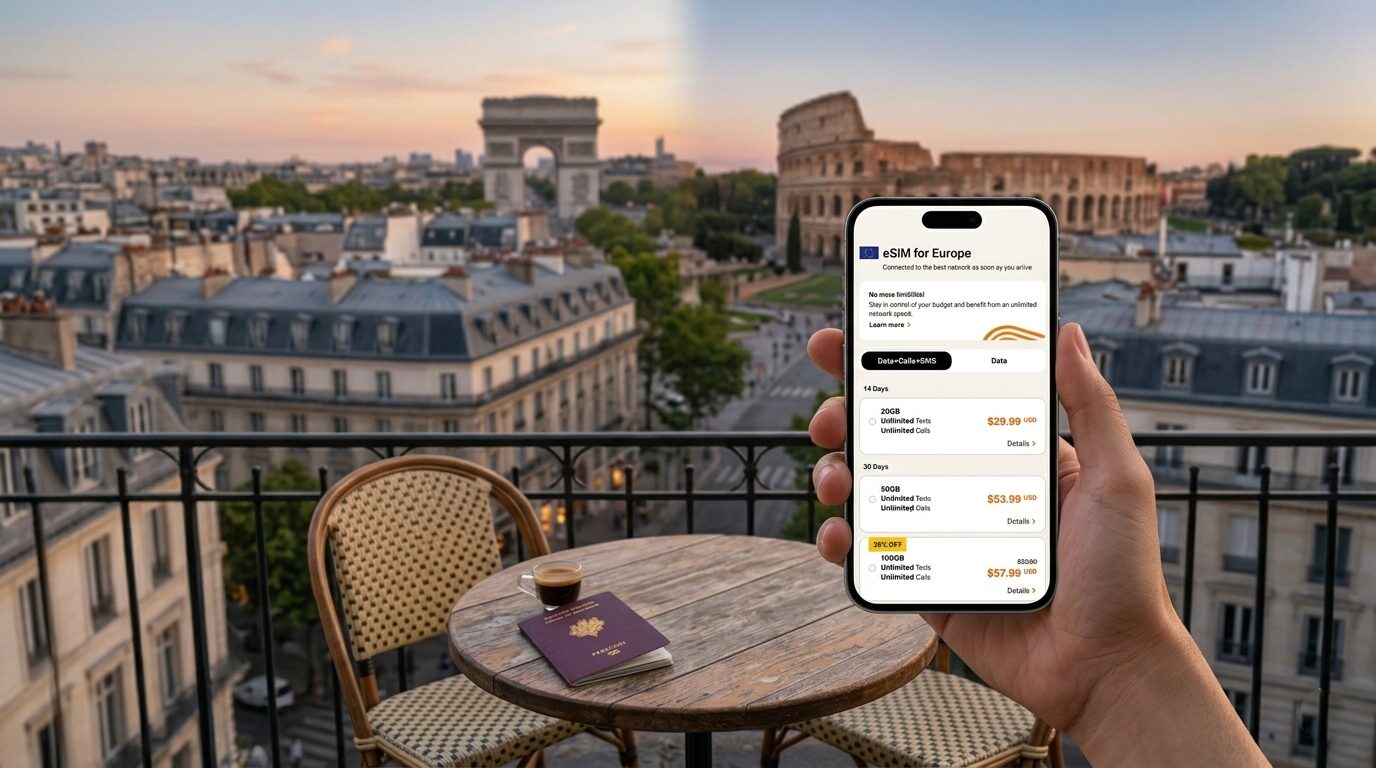
For a single-country trip, a regional vs. global data package decision is clear: choose a targeted regional eSIM covering that nation for the best value and local network speeds. A global package is only practical if your itinerary spans multiple continents or islands lacking a single regional zone, like a Europe plan versus a worldwide plan for a cross-Atlantic journey.
Q: Should I buy a regional package for two neighboring countries?
A: Yes, if both nations fall under the same regional eSIM zone (e.g., a European Union plan for France and Italy); that is cheaper than global and offers faster local roaming than a worldwide plan.
Prepaid Top-Ups vs. Subscription Services for Frequent Flyers
For frequent flyers, choosing between prepaid top-ups and subscription services hinges on your travel rhythm. Prepaid top-ups offer ultimate flexibility, letting you buy data only when you land, perfect for unpredictable trips or short layovers. Subscriptions, meanwhile, deliver consistent global coverage for nomads, with automatic monthly renewals that eliminate the hassle of re-purchasing plans. Table below shows key distinctions:
| Aspect | Prepaid Top-Ups | Subscription Services |
|---|---|---|
| Best for | Occasional, varied trips | Monthly or constant travel |
| Cost per trip | Pay-as-you-go, no waste | Fixed fee, predictable |
| Management | Manual top-ups each time | Auto-renewal, set & forget |
Data Speed Tiers: When High-Speed Access Matters Most
High-speed data matters most when you’re navigating unfamiliar streets or uploading travel photos. For video calls back home or streaming a guidebook video, choose a plan with unlimited high-speed tiers. Slower speeds are fine for messaging or email, but mapping apps and social media feeds suffer on throttled connections. Prioritize a tier that offers at least 10 Mbps for smooth real-time use, especially in cities with heavy network demand.
Activating and Managing Coverage Without a Physical Card
You land in Seoul, your phone still in airplane mode from the flight. Instead of hunting for a SIM vendor, you open a travel eSIM app you installed before leaving. Tapping Activating and Managing Coverage Without a Physical Card is instant—you scan a QR code or paste a confirmation code, and the profile downloads directly to your phone’s eSIM slot. Within sixty seconds, you see carrier bars appear. Later, at a café near Myeongdong, your data slows; you open the app, buy a top-up, and select the same eSIM line to refresh the data allowance—no waiting for a new plastic card to arrive. When you fly to Tokyo next week, you simply deactivate your Korean profile and install a Japanese eSIM in the same phone slot, all managed digitally.
No physical card means you can switch countries mid-trip without ever visiting a store or losing connectivity—the magic happens entirely on your device.
Quick Setup via QR Codes and Mobile Apps
Activating a travel eSIM is streamlined through a QR code scan from your mobile app. After purchase, the app instantly displays a unique QR code; simply point your phone’s camera at it to load the profile. The setup completes in under a minute, with no physical card or store visit required. This on-demand activation lets you flip on connectivity the moment you land, not before. The companion app also lets you monitor data usage and top up directly.
- Snap the QR code from the provider’s app to install the eSIM profile immediately.
- Manage multiple travel plans within the app, switching profiles without re-scanning.
- Receive push notifications for data allowance, prompting instant QR-code-free top-ups.
- Delete expired eSIMs from the app interface to free up device storage.
Switching Between Local Carriers While Abroad
Switching between local carriers while abroad via a travel eSIM is a manual process managed through your device’s cellular settings. You do not need to swap a physical card; instead, you toggle between downloaded eSIM profiles, each linked to a specific local network. This allows you to select the strongest signal or cheapest data rate in real time. Your primary home eSIM can remain active for calls while a secondary local profile handles data. Carrier selection on an eSIM can be changed instantly from the settings menu, offering practical flexibility without deregistering from your home plan.
Travel eSIMs let you switch between local carriers by activating different digital profiles, enabling you to manually select the best network for coverage or cost without touching a physical SIM.
Monitoring Data Usage and Extending Plans Mid-Trip
Monitoring data usage mid-trip is critical to avoid throttled speeds, which is why real-time usage tracking via the travel eSIM app is essential. When nearing your plan’s cap, instantly extend coverage by selecting a top-up package within the same operator’s interface, avoiding any physical swap. The logical sequence is: First, open the eSIM dashboard to view remaining data, often updated with minimal delay. Second, if below 20%, purchase a data-only extension tailored for the current zone. Third, confirm the add-on activates immediately, overriding the expired tier without restarting the device. This process ensures seamless connectivity during the journey.
Compatibility Checks Before You Depart
You pull out your phone before a trip, imagining seamless connectivity. Compatibility checks before you depart transform that hope into certainty. First, you must verify your device is unlocked—otherwise, the travel eSIM stays dormant. Next, confirm your phone supports eSIM technology; newer models from Apple, Samsung, and Google typically work, but older ones might not. A crucial step: check that your specific carrier settings allow eSIM activation without physical SIM removal. I once watched a friend fumble at immigration because he skipped this, his travel eSIM useless on a locked device. Always test the setup at home, connecting to a local network on trial data. This advance test saves hours of troubleshooting abroad, ensuring your travel eSIM activates the moment you land, not after lost time.
iPhone, Android, and Unlocked Device Requirements
Before purchasing a travel eSIM, device compatibility with eSIM technology is non-negotiable. For iPhone, models from iPhone XR onward (including XS, 11, 12, 13, 14, 15, and 16) support eSIM, but Chinese-market iPhones lack this feature entirely. Android devices must run Android 10 or newer, though carrier-branded models like certain US-locked Samsung or Google Pixel variants may have eSIM disabled by the carrier. An unlocked device is mandatory: carrier-locked phones restrict eSIM profiles to the original carrier’s network. To confirm compatibility:
- Check your phone’s IMEI on the eSIM provider’s website.
- Verify “SIM Lock” status is “No SIM restrictions” in Settings.
- Ensure no dual-SIM conflicts—some regions block simultaneous eSIM and physical SIM use.
Testing with a free eSIM trial before departure can avoid activation failures abroad.
Dual SIM Configurations: Keeping Your Home Number Active
Before departing, check your phone supports a dual SIM configuration for travel eSIM, as this directly enables you to keep your home number active. Insert your physical home SIM in one slot and the travel eSIM in the other. Configure your primary data line exclusively to the eSIM, while routing all calls and texts through the home SIM. To avoid accidental roaming charges, follow this clear sequence:
- Assign the eSIM to cellular data.
- Set your home SIM for voice and SMS.
- Toggle “Data Roaming” on only for the eSIM.
This setup preserves your home number for banking codes and urgent calls without interrupting the travel eSIM’s internet connection.

Network Band Support Across Different Continents
When checking compatibility, remember that network bands vary wildly between continents. A travel eSIM must support the specific frequencies used Singapore eSIM in your destination. For example, North America relies heavily on LTE bands 2, 4, and 12, while Europe commonly uses bands 3 and 20. Asia is a mix, with Japan favoring unique 4G bands. Without this support, your phone might lose signal. Seamless global connectivity depends on your device’s band compatibility. **Q: What happens if my phone lacks a local band?** A: You’ll likely experience weak or no signal, making the eSIM effectively useless in that region.
Cost Comparisons and Hidden Savings
When comparing travel eSIM costs, the upfront data package price can be misleading. Hidden savings often emerge by avoiding per-minute roaming charges or daily passes from traditional carriers, which accumulate quickly. Many eSIM providers offer regional plans covering multiple countries, reducing costs compared to purchasing separate local SIMs for each destination. Additionally, you eliminate physical SIM fees and delivery charges. Total cost comparisons should factor in free top-up apps, loyalty discounts, and the ability to switch plans mid-trip to avoid unused data, revealing significant long-term savings beyond the initial sticker price.
Comparing One-Time Passes to Traditional Carrier Add-Ons
When comparing one-time travel eSIM passes to traditional carrier add-ons, the primary cost advantage lies in avoiding daily activation fees. Carrier plans often charge a flat daily fee for international roaming, which adds up even on days you use little data. One-time passes, by contrast, deduct only from a pre-purchased data pool, offering precise granular billing. This eliminates the penalty for sporadic usage, such as short layovers or rest days. Additionally, carrier add-ons typically expire after a fixed billing cycle, while one-time passes often have longer validity periods. This flexibility allows you to stretch a small data pass across a multi-leg trip without overpaying for unused daily allowances.
Group and Family Plans for Shared Trips
For shared trips, group and family plans unlock massive savings by pooling data across multiple lines. Instead of buying individual eSIMs, you pay a single, lower rate per gigabyte for the whole clan. Shared data pools eliminate wasted unused gigabytes, as one person’s light browsing offsets another’s streaming. This turns the typical cost-per-person model on its head, rewarding collective consumption. Many providers let you add or remove lines mid-trip, adapting to latecomers or early departers without penalty. When splitting the bill, per-person transparency ensures no awkward guesswork—just fair, real-time tracking of each traveler’s usage.
| Aspect | Group Plan Benefit | Family Plan Benefit |
|---|---|---|
| Cost per GB | Drops with more members | Fixed low rate for all lines |
| Data Pooling | Flexible sharing across travelers | Shared among designated users |
| Line Management | Add/drop per leg of trip | Pre-set family roster, minimal changes |
| Billing | Single invoice for the group | One bill, with user breakdown |
Avoiding Unexpected Charges with Clear Usage Caps
Travel eSIMs eliminate surprise bills by enforcing clear usage caps that pause data upon reaching a set limit. Unlike physical SIMs that allow overage charges to rack up, these digital profiles offer fixed data allowances, often with a hard stop or a prompt to top up. Before departure, verify that your chosen plan specifies exactly when throttling occurs or service cuts off. This transparency lets you budget data usage precisely, avoiding any accidental roaming fees or unexpected deductions while traveling.
Real-World Use Cases for Every Type of Voyager
A backpacker hopping through Southeast Asia avoids SIM card hunts at every border by buying a regional eSIM plan for automatic multi-country coverage. A digital nomad working from Lisbon cafés relies on a daily high-speed data pass to maintain video calls and cloud access without throttling. A family on a Caribbean cruise uses a shared eSIM account, topping up only when the kids stream onboard, dodging ship Wi-Fi fees. A solo business traveler in Tokyo activates a 7-day unlimited data eSIM at landing, bypassing airport kiosks and staying reachable for client meetings. For every voyager, the core benefit is seamless connectivity across destinations, turning a smartphone into a local device instantly—whether for urgent navigation in a foreign city or spontaneous social sharing from a remote trail.
Business Travelers Needing Reliable Video Calls
For business travelers needing reliable video calls, a travel eSIM eliminates the dropped connections and pixelated faces that kill a client pitch. High-bandwidth, low-latency data ensures your Zoom or Teams call remains crystal-clear from a Tokyo taxi to a Berlin café. Stable connectivity lets you focus on the deal, not the dead zone.
- Switch between local networks automatically to avoid congestion.
- Pre-purchase tiered data plans that prioritize video bandwidth.
- Keep your home number active for calls while using eSIM data for video.
Backpackers Relying on Maps and Translation Tools
Backpackers navigating unfamiliar terrain depend on an active travel eSIM to access real-time mapping, ensuring offline-capable apps like Google Maps load updated routes and points of interest without SIM-swapping delays. Reliable data for offline translation tools is equally critical, as eSIM connectivity lets apps pre-download language packs and process phrases mid-conversation in remote hostels or border crossings. The sequence for seamless navigation involves:
- Activating the eSIM upon landing to avoid local SIM queuing.
- Pre-caching maps and translating dictionary files over the steady connection.
- Using the persistent network signal to refine live location markers and transliterate street signs through camera-based translators.
This eliminates reliance on spotty hostel Wi-Fi or paper maps, keeping the backpacker oriented and articulate anywhere.
Digital Nomads Maintaining Workflows Across Time Zones
For digital nomads, maintaining workflows across time zones demands that connectivity be both instant and reliable, as a missed message can derail a staggered handoff. A travel eSIM eliminates the friction of swapping physical SIMs when crossing borders, keeping team communication tools like Slack and Asana online without interruption. This constant link allows nomads to sync shared calendars and deadline reminders precisely, ensuring asynchronous tasks progress smoothly even when colleagues sleep. By preserving the same local number for two-factor authentication and client calls, the eSIM prevents workflow gaps, letting the professional focus on output rather than connectivity troubleshooting.
Troubleshooting Common Connectivity Hiccups
When a travel eSIM fails to connect, first toggle Airplane Mode for 30 seconds to force a fresh network registration. If connectivity remains absent, manually select your provider’s network under cellular settings instead of using “Automatic,” which can latch onto weaker local towers. For persistent data issues, verify that “Data Roaming” is enabled specifically for your travel eSIM line, not the primary line.
Slow speeds often stem from congested local networks; switching to a 3G-only mode can restore basic functionality until congestion clears.
Finally, check the eSIM’s APN settings against your provider’s documentation—incorrect entries frequently block data entirely.
What to Do When Activation Fails at Arrival
When activation fails at arrival, first ensure your device’s data roaming is toggled on and that you have selected the correct eSIM profile for the destination. Manually search for available networks under cellular settings and select a local carrier listed in your eSIM provider’s instructions. If no connection appears, restart your phone to force a fresh network registration. Verify that your eSIM’s validity period has not yet started or expired based on your departure date. Lastly, check if a manual APN configuration is required; inputting the correct APN often resolves persistent activation failures.
Dealing with Slower Speeds in Remote Areas
When traveling with an eSIM, slower speeds in remote areas often stem from limited tower bandwidth. Your eSIM automatically roams onto available local networks, but congested backhaul can throttle data. Switch your device to 4G or 3G only in settings, preventing it from hunting for a weak 5G signal that drains battery and yields no benefit. Manually select a different local carrier from your eSIM’s provider list—one tower might offer better throughput. Offline maps and cached content become your lifeline; preload essentials before leaving town. Accept that streaming video is impractical; instead, optimize by lowering default quality in apps like YouTube.
| Tactic | Speed Impact | Battery Use |
|---|---|---|
| Force 4G/3G | Moderate improvement | Lower drain |
| Manually switch network | Variable, often better | Moderate drain |
| Preload content | Circumvents slow speeds | Minimal |
Contacting Support While You Have No Signal
When you lack connectivity, contacting support for your travel eSIM requires prior preparation. Before departure, save the eSIM provider’s direct contact details, including their WhatsApp number or in-app chat link, to your phone’s notes or a screenshot. This ensures you can message them when you reach Wi-Fi elsewhere. Some providers offer offline help via a pre-loaded troubleshooting guide in their app’s documentation. If you have no signal in a remote area, the most reliable step is to use a different device, like a laptop connected to local Wi-Fi, to access the provider’s live chat. Proactive offline troubleshooting often requires having these avenues ready before signal loss occurs.
Future Trends Shaping Global Mobile Access
The future of global mobile access with travel eSIM transforms a solo hiker in Patagonia, who no longer hunts for local SIMs but preloads a regional plan that switches seamlessly between Chilean and Argentinian networks as she crosses the border. This shift hinges on real-time connectivity layers that adapt to her route, not just coverage maps. Will travel eSIM eventually sync with wearable devices to auto-alert abroad? Yes, emerging profiles already pair with smartwatches, letting her navigate, message, and share photos without pulling out her phone—a practical step toward frictionless, context-aware roaming for every trip.
Multi-Network Aggregation for Seamless Roaming
Multi-Network Aggregation for Seamless Roaming means your travel eSIM can simultaneously connect to multiple local towers, bundling their signals into one super-fast link. Instead of hunting for the strongest single network, your device intelligently combines data streams from different carriers, so you don’t drop calls or lose maps in a dead zone. This dynamic network bonding creates a reliable connection even in crowded transit hubs or remote areas. Roaming continues without manual switching, as the eSIM automatically balances loads between providers in real-time.
- Prevents dropped connections by instantly shifting data between networks in low-signal zones
- Boosts download speeds in congested spots by merging bandwidth from multiple carriers
- Allows background network switching without interrupting video calls or navigation
- Reduces battery drain by distributing load rather than constantly searching for one strong signal
Integration with Smart Luggage and Wearables
Your travel eSIM will soon transform into a central hub that syncs your smart luggage and wearables. A connected suitcase will automatically trigger a local data plan the moment you land, providing real-time GPS tracking for your bag via your eSIM. Meanwhile, your smartwatch with integrated eSIM becomes your roaming lifeline, displaying boarding passes and biometric payment tokens without needing your phone. This convergence eliminates juggling multiple devices, creating a seamless ecosystem where your wearables and luggage independently access global networks through one unified eSIM profile.
Q: Can my eSIM power both my smart luggage tracker and my smartwatch simultaneously? Yes, a single multi-device travel eSIM plan can manage simultaneous connections, allowing your suitcase to report its location while your wearable stays online for calls and maps.
Regulatory Shifts and Anti-Monopoly Benefits for Users
Regulatory shifts are starting to break up eSIM monopolies, which is awesome for your wallet. When local carriers lose their grip, you get real competition on travel data plans. This anti-monopoly push means you can now compare travel eSIM providers for the best deal, not just accept whatever your home carrier offers. The process follows a clear sequence: first, regulations force carriers to unlock devices; second, third-party eSIM apps gain access; third, you enjoy lower prices and flexible plans. Imagine no more roaming rip-offs because multiple providers battle for your trip. That’s the practical win—more choice, less cost, directly from slashing monopolies.
- Device unlocking eliminates carrier lock-in.
- Open access lets new eSIM providers compete.
- Competition drives down prices and boosts plan options.
